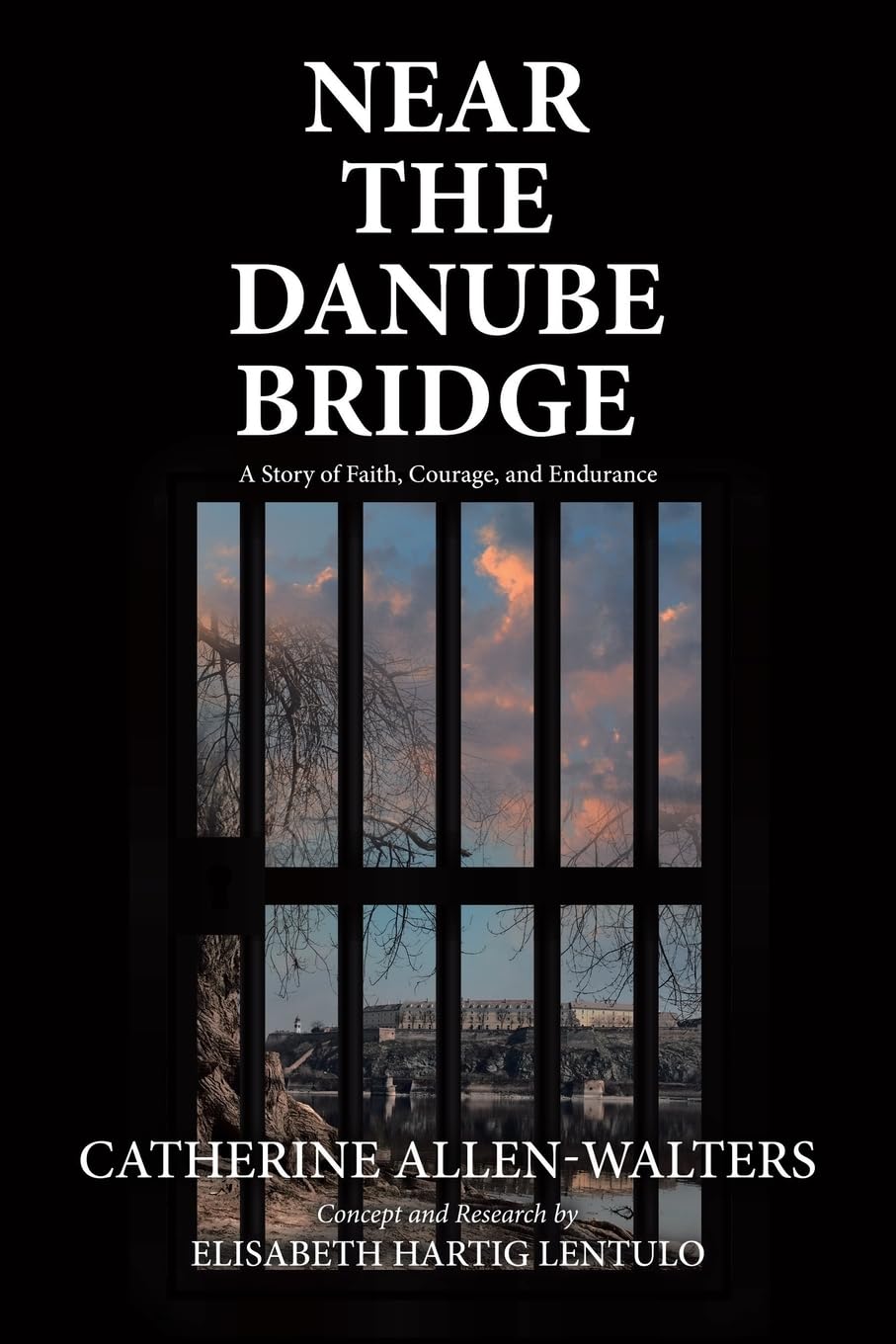
Near the Danube Bridge
by Catherine Allen-Walters & Elisabeth Hartig Lentulo
Rights Sold
Description
Awards & Endorsements
Author(s)

Catherine Allen-Walters & Elisabeth Hartig Lentulo
Related Titles


| Publisher | Archway Publishing |
| Publication | Jan 21, 2024 |
| Format | Paperback/Softback |
| ISBN | 978-1665750516 |
| Pages | 332 |
| Age | 18 - 99 |
| Price | $24.99 |
Near the Danube Bridge
Born into the shifting fault lines of the Balkans, Kalman Hartig comes of age in a world torn apart by war, ideology, and ethnic hatred. A gifted musician and devout Seventh-day Adventist, he refuses to betray his conscience when communist Yugoslavia demands obedience at any cost. For that choice, he is imprisoned, tortured, and sent to labor camps—where faith, music, and memory become his only means of survival.
Running alongside his story is that of Hermina “Minka” Kirchner, whose own childhood is scarred by wartime terror, loss, and displacement. When their lives finally join, love offers hope—but not safety. Together they must navigate persecution, poverty, migration, and the long shadow of trauma as they search for a place where they can live freely and raise a family in peace.
Sweeping across generations and borders, Near the Danube Bridge is an epic true story of endurance, devotion, and the stubborn human will to begin again.
______________________
Book Club Discussion Points:
- What did you learn about European history during the early to middle 20th century that you didn’t know before? Which events did you find to be the most interesting?
- Have you experienced discord within your own family or close circle of friends regarding different religious beliefs?
- Other than Kalman, the protagonist, was there another character to whom you related? How?
- Did you discover where the title of the book came from?
- If you were facing persecution, where would you draw the line? When would you say it wasn’t worth it anymore, such as refraining from eating meat or something similar?
- What are the most striking differences you see between immigration laws in the book and our present time?
- Were you surprised that, even by 1959, German officers in the refugee camp said they didn’t want any Jews in the camp when they discovered the Hartigs worshipped on Saturdays? How did this make you feel?
- Minka served as a pivotal character throughout the book. How do you think Kalman’s life would have been different without her?
- Our world has a large refugee problem due to people fearing for their very lives if they stay in their homeland. Which circumstance or matter of conscience would make you consider leaving your own country and becoming a refugee?
Reviews, Awards & Endorsements
https://www.kirkusreviews.com/book-reviews/catherine-allen-walters/near-the-danube-bridge/
BOOK REVIEW
A family experiences persecution for their Seventh-day Adventism in communist Yugoslavia in Allen-Walters’ biography. Religious oppression in 20th-century communist regimes is well documented; however, the story of the treatment of members of the Seventh-day Adventist Church—whose observance of Saturday as the Sabbath, vegetarianism, and abstinence from alcohol make them stand out among their fellow Christians—has been understudied. Following the 2022 Russian invasion of Ukraine, Elisabeth Hartig Lentulo was compelled to share her own family’s history with violent autocracies. She possessed recordings made by her deceased father, Kalman Hartig, who talked to church audiences about his upbringing in an affluent Yugoslavian family, his conversion to the Seventh-day Adventist movement, and his later hardship under the nation’s nascent communist government; she solicited the help of writer Allen-Walters to write a book detailing this history. Together, the duo gathered and translated primary source documents and letters, interviewed family members, and researched the historical record. Imprisoned as a conscientious objector in post-World War II Yugoslavia, Hartig described himself as a “shrink-wrapped skeleton.” Prison leaders targeted him for his distinctive religious beliefs, and specifically beat him for refusing to work on the Sabbath. Allen-Walters, a professional violinist, also highlights how music powerfully lifted Hartig’s spirits, as his own background with the violin and church music sustained his faith. The stories of Hartig and his wife, Hermina, whose winding path of migration across Europe eventually took them to the United States, give the book its driving force. The author also effectively places the narratives within a larger genealogical history of their extended families, as well as the historical context of Eastern Europe. Scholars may lament the book’s lack of formal citations, as it’s based primarily on family documents and oral histories; however, these provide a firsthand look at communist Yugoslavia from the perspective of a religious minority, and many documents are helpfully reprinted throughout. The harrowing, engaging narrative is also complemented by a wealth of other visual aids, including maps, family trees, and a plethora of black-and-white photographs. A poignant story of survival, faith, and family.
Author