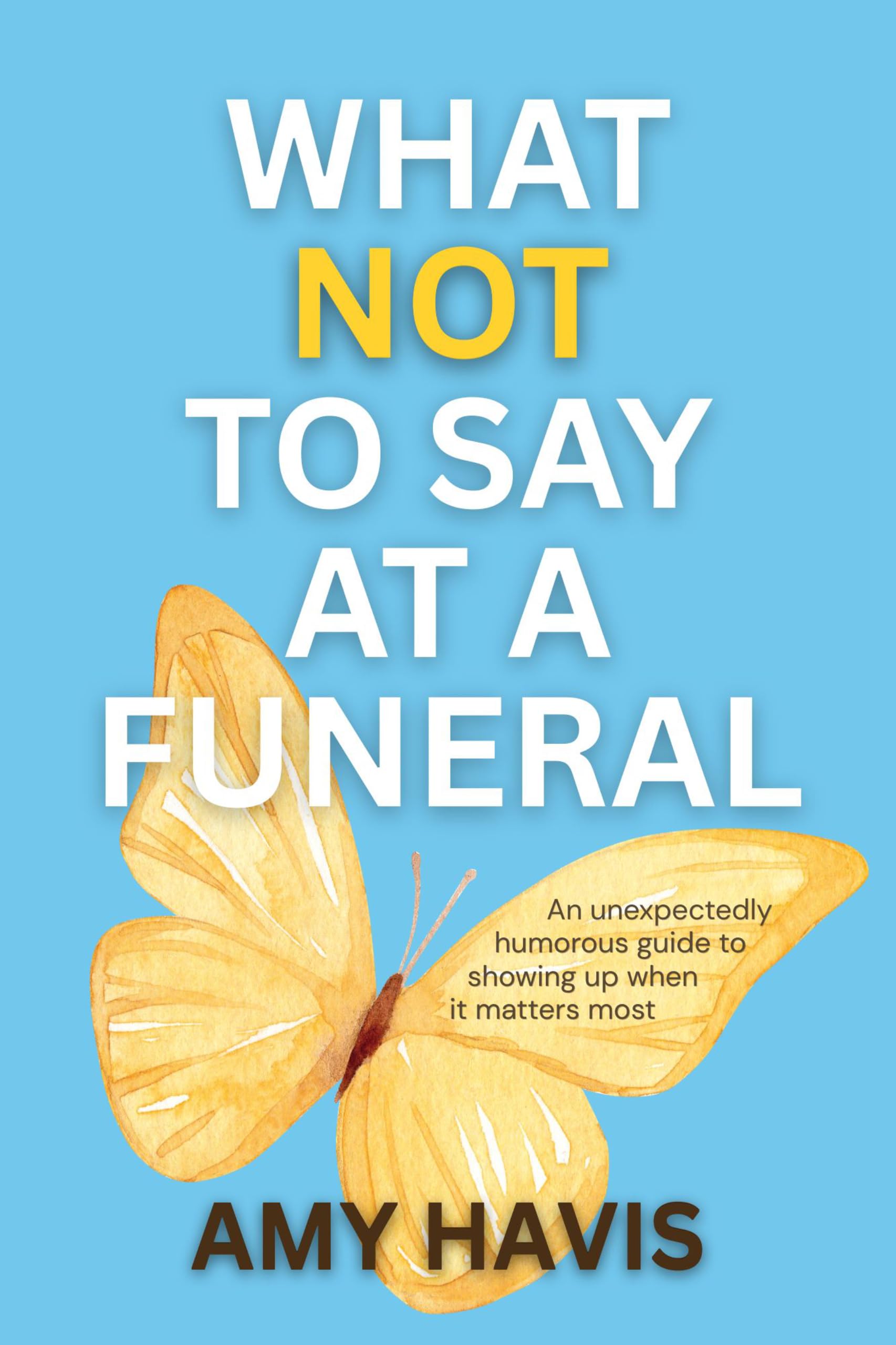
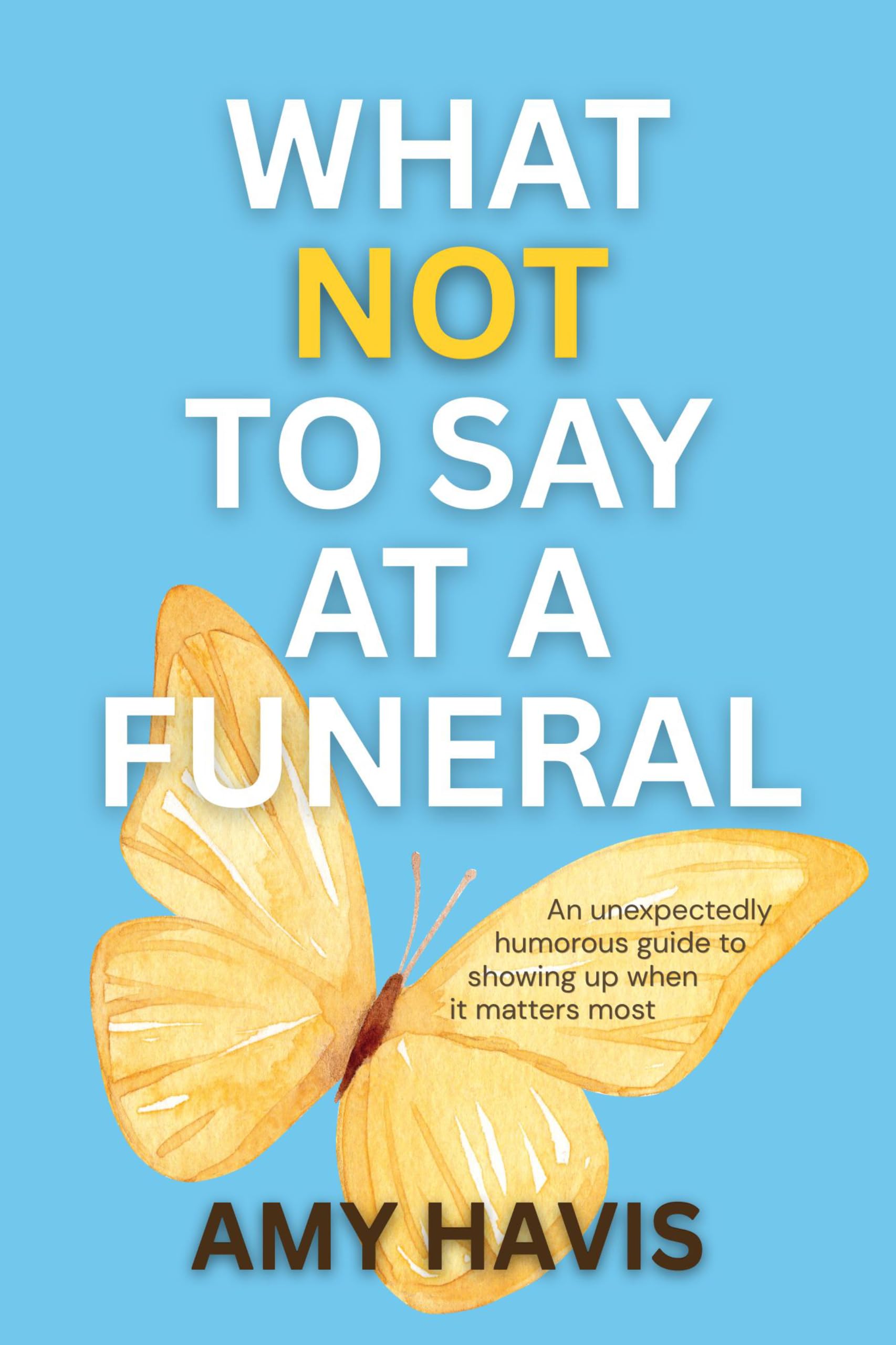
What Not To Say At A Funeral
by Amy Havis
Rights Sold
Description
Awards & Endorsements
Author(s)

Amy Havis
Related Titles


| Publisher | Left Field Publishing |
| Publication | Oct 06, 2026 |
| Format | Hardback |
| ISBN | 978-1966883128 |
| Pages | 124 |
| Dimensions | 5 x 8 |
| Age | Adult 18+ |
| Price | $14.00 |
What Not To Say At A Funeral
A humorous grief guide, Brené Brown–style. Want to help someone who’s grieving but don’t know what to say? A compassionate, practical guide to supporting people through grief. Drawing on lived experience and deep empathy, Amy Havis explains why common phrases often cause harm―and offers better alternatives that communicate care, presence, and respect. For readers drawn to BRENÉ BROWN, IT’S OK THAT YOU’RE NOT OK, and THE ART OF SHOWING UP. Not all losses come with instructions. And most of us are never taught what to say when someone is grieving―so we say nothing at all. After losing her infant daughter, Amy Havis came face to face with how ill-equipped most of us are―not just to grieve our own losses, but to support one another through them. Drawing from lived experience, real-life scenarios, and hard-earned insight, Havis offers practical guidance for friends, families, coworkers, and communities navigating loss together. Part narrative non-fiction, part social guide, the book invites readers to let go of platitudes, resist silence, and choose presence instead. For grievers and the people who love them.
Reviews, Awards & Endorsements
“With humor, humility, and profound vulnerability, Havis gracefully and honestly tackles the subject we so often avoid. Blending personal narrative with thoughtful research and practical wisdom, WHAT NOT TO SAY AT A FUNERAL offers compassionate guidance for when life’s worst ‘what-ifs’ become reality. This book goes beyond telling us what to say. It teaches us how to show up. A wise and deeply human guide reminding us that in moments of loss, presence matters more than perfection.” –Katherine Rose Woller, bestselling author of Calling It Off: Memoir of an Almost Bride
“Whether you’re grieving a loss or trying to comfort someone in their grief, Amy’s raw, visceral honesty, paired with a healthy dose of humor, will help you navigate the world of tragedy and grief that no one willingly enters, yet we all must face. Amy’s wisdom and insights gained through the slow loss of her daughter, Hope, will help anyone facing loss make sense of the storm of emotions swirling inside. And even if you have not suffered loss, you’ll find her practical guidance prepares you to comfort others in their heartache. We will all attend funerals; this book expertly helps us bring words of healing with us.” –John Burke, New York Times bestselling author of Imagine Heaven
“Many readers have a book they strongly feel should be REQUIRED READING. This is mine. Most people likely don’t know they need to read this book, but trust me, they do. At some point in life, it’s unfortunate, but you will be face to face with a person in grief for a death that should not have happened when it did – the loved one of a child that has died. You want to comfort this person, you might THINK you know best how to do so, but the truth is, there is no comfort for the death of a child. There are a lot of painful, stupid things people say to those grieving a child, without meaning to cause harm. This book tells you exactly what those are and you may be surprised to learn that telling a grieving parent, “Everything happens for a reason” is not a comfort, but in fact a very painful thing to hear, along with a list of other things not to say (and on the flip side, what TO say). It reminds the reader that the emphasis in grief should be offering genuine love and support to the griever(s). Make time for this book – it’s short and has a lot of white space and it’s so incredibly important. Then join me in the crusade to have EVERYONE read it.” –Jen, Beagle and Wolf Books in Park Rapids, MN
“Everyone should buy this book in bulk! Amy Havis builds from her own sorrow to create this easy-to-use guide to being a supportive friend when someone has a loss. The format is designed for the overwhelmed, with lists, stories and advice, all mixed in a reader-friendly way. Amy Havis recalls what helped her and her family, and also shares the comments and actions that hurt them in their time of loss, and shows how o mend the relationship when someone is hurtful. This would be a great book for office break rooms, funeral homes, and doctor’s offices. Its wisdom comes in small bites, the way we all need it.” –Mary A, NetGalley Reviewer
“I am forever grateful to people who normalize having conversations about death, loss, grief and terminable illness. This book, part a tribute to Amy’s daughter Hope and part a guide for the rest of us as we navigate supporting others through loss and losses of our own, allows her gentle voice to shine light on the next right steps. It was a reminder that connection is how we survive and to not be so afraid of getting it wrong that we don’t show up when it matters most.” –Shannon M, NetGalley + Goodreads Book Reviewer
“This was a quick read (not much over 100 pages), but packed in a lot of the author’s personal experience with grief after the loss of her newborn daughter, who had not been expected to live long after birth. The author writes matter-of-factly about her experience of both the loss itself and the interactions she had with others leading up to and following her daughter’s passing. I’ve read a number of books about grief, and would say that although this one feels quite limited in scope with most of the discussion about child loss, this book is worth reading if you know someone who has experienced or is currently anticipating the loss of someone close to them. This is especially true if you have not read other works about grief and are in urgent need of some guidance as to how to address someone else’s loss and want something a bit more in depth than what you could get from online forums.” –Addison D, NetGalley + Goodreads Book Reviewer
“This is a brief, informative, deeply personal look at grief. There are lessons in it that appear simple but do not come naturally for everyone. I appreciate the fact that Havis explains from personal experience how even when you feel that you have experienced a lot of grief, you might still not have the best thing to say to another person who is experiencing their own grief. It takes a subject that is difficult for many to talk about and distills that into some great tips and suggestions about how to be/sound helpful to and available for those in grief. I appreciate that despite the fact that the author said her own religion was a large part of her and her family’s experience, she acknowledges that this may not be the same for everyone, and so this does not focus on religion the way many books on the subject do. This could be beneficial for wider readership. This is a great book for those who are interested in grief studies. It might be useful in hospice facilities, mortuaries and funeral homes, or at some doctors’ offices. I enjoy reading books about grief, so this was ideal. I appreciate the brevity and honesty.” –Jessica S, NetGalley + Goodreads Book Reviewer
“It is a short read at about 100 pages. The author beautifully shares her experiences with grief and her social interactions around those experiences in a way that is helpful. It is interesting that, as humans, one of our first go-to things to say is “I know how you feel” as a tool of empathy and then bring up something that we experienced that was similar. This book gently reminds us that it’s not about us and provides a host of other, more sensitive things to say and do. The beginning of the book acknowledges that in our modern-day society, we are really separated from death and that the natural grieving process and the crying that goes with it makes a lot of people uncomfortable. Havis encourages us to lean into that grief and provide a helping hand or a safe space for feelings and empathy.” –Kiersten, Goodreads Reviewer
“Everyone should read this book! It’s well written and offers memorable, solid advice. The writer speaks from the heart and addresses grief in an honest, relatable way.” –Nancy T, Goodreads Reviewer