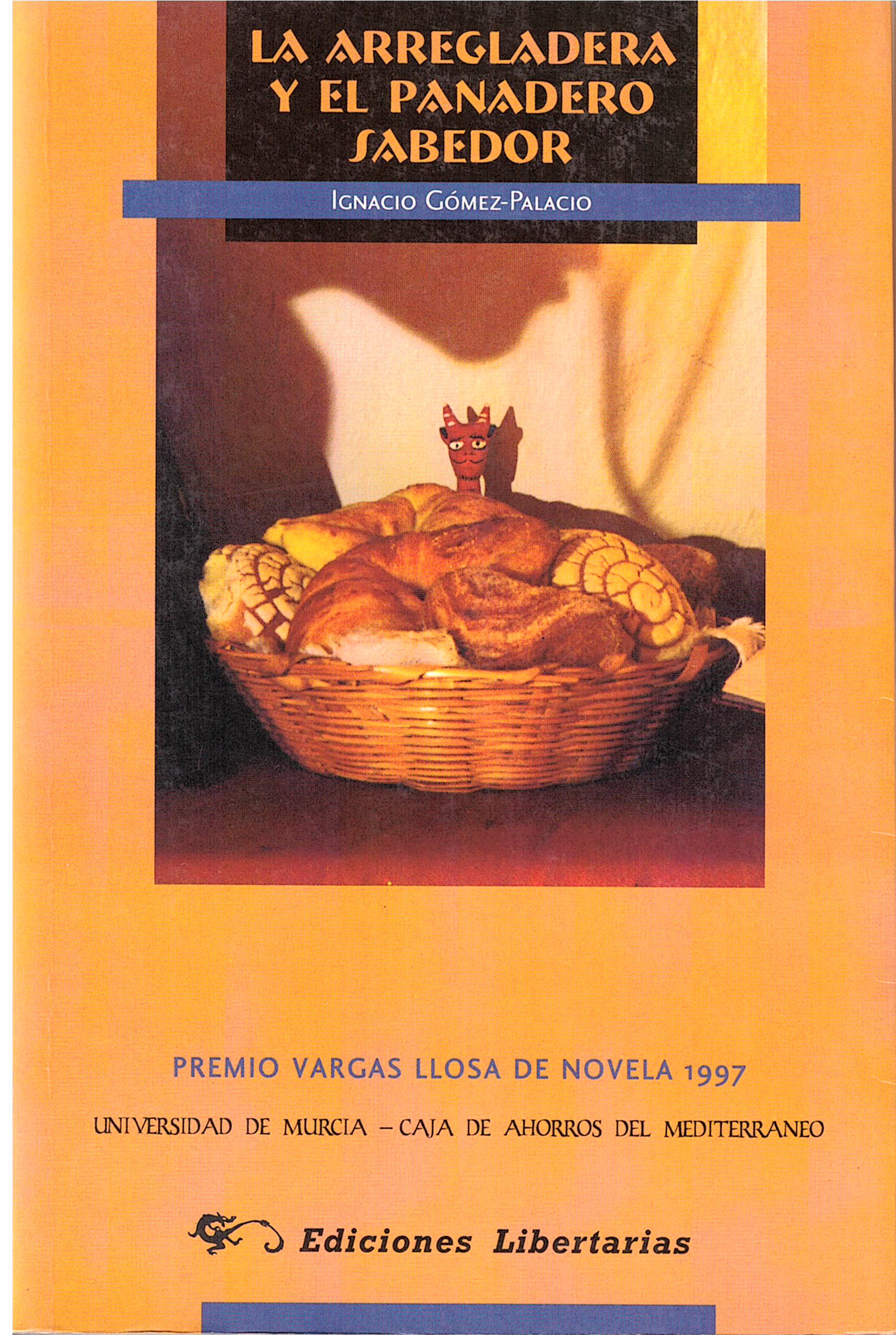
La Arregladera y el Panadero Sabedor
by IGNACIO GÓMEZ-PALACIO
Publisher
Plaza & Janés and others
Publication
Jan 03, 2000
Format
Paperback/Softback
Illustrated
No
Price
15
Dimensions
13.5 x 21 in
ISBN
968110419-6
Pages
186
Age
Adult 18+
Category
Literary Fiction
Rights Sold
🌍 World Wide Rights Available
Description
Awards & Endorsements
Award
Related Titles

The Cassatt Sisters
Lisa Groen

Girl in a Box
Jean Gordon Kocienda

The Raven
Susan McCauley

The Judgment Line
Curt Varone

The Fabric of Wishful Thi...
Kathleen Curtis Wilson

Light and Shadows
Darin Gibby

All the Hidden Pieces
Dana Ridenour

God's Own Country
Mathew L Reyes

Dog Logic
Tom Strelich

In the Wake of Golgotha
Daniel Grace

Dark Cloud
Ken Sansom

| Publisher | Rancho El Sereno |
| Publication | Jan 03, 2000 |
| Format | Paperback/Softback |
| ISBN | 968110419-6 |
| Pages | 186 |
| Age | 18 - 99 |
| Price | $15.00 |
Categories
Literary Fiction
La Arregladera y el Panadero Sabedor
by IGNACIO GÓMEZ-PALACIO
The "Arregladera" is a social figure that held an important place within Mexican society, both in the north and the center of the Republic, especially in various parts of the smaller provinces (populations of up to 5,000 inhabitants). As roads and communications brought towns and cities closer together, this surprising tradition was carried along; however, as the reader will realize, it would be beneficial for it to return, as its services can be of undeniable value for social peace.
The activity of the "Arregladera" should not be confused with that of "La Celestina" (by Fernando de Rojas) or the Jewish matchmaker (“shadjaná”). She is neither a woman of ill repute and a mercenary with a mercantilist spirit like the former, nor is she part of close family connections like the latter. She is the one who resolves various problems and romantic issues in her community, without charging fees, although she receives gifts (similar to legal consultants in Ancient Rome). She is the regional solution for achieving peace in a medium-sized community, avoiding violence, in this case, in Valle de Bravo, State of Mexico. The "Arregladera" “fixes” open and furtive loves, deals with livestock, grains, lands, and ranches. She triangulates between the “needy,” who approach her discreetly, as in public she is known as a “sobadora,” because she soothes aching bones with special mastery because 'Clarita', the “Arregladera”, is blind. She lives hidden with her accumulated wealth ('centennials', famous gold coins). She holds personal bench in the town church. The community cannot live without her presence, but her activities are not a topic of open conversation. As a young woman, she lived with four extremely lazy brothers, due to a wrong decision made by their father.
By a strange twist of fate, the "Panadero Sabedor" holds the control and administration of both civil and ecclesiastical records, which are kept separately. The first is overseen by the government and the second by the Catholic Church. The "Panadero Sabedor" takes advantage of this to alter records, reducing the age of widows and older women, among other misdeeds, in exchange for money. The consequence is that public records give official status to lies, while the "Arregladera" knows the secret truths (like in the case of "help" to the infertile husband, who parades around boasting about impregnating his wife, unaware that the newborn is not his). The town becomes a hall of mirrors of crossed truths and lies, where the "official truth" is a lie, and the arrangements of the "Arregladera" are "secret truths." It is a picaresque plot of tales, falsehoods, and inventions, especially when the "Arregladera" and the "Panadero Sabedor" marry and join forces to squeeze the pockets of the residents, which reaches a peak when the beauty of the town, is disqualified in the Miss State of Mexico contest, for having been born in Monterrey (which is an official lie). The daughter of the wealthy local chieftain, a member of the ruling political party, wins instead. People become enraged and violence erupts. The “Panadero Sabedor” hangs strangled from one of the imposing ash trees surrounding the town's central square, after shouting to the people, the worst insult in the Spanish language.
The jury in Spain: this novel is clever and playful, ironic and surprising. It recues the picaresque novel.
Reviews, Awards & Endorsements
Award
In 1997, this novel recived the Premio Internacional de Novela Mario Vargas Llosa, granted by The University of Murcia in Spain.
Received many many favorable comments in the cultural media in Mexico. Samples can be provided.
Three editions were published:
January, 1998 by Ediciones Libertarias i Spain.
January, 2000: Plaza y Janés (Penguin Random House Group).
2014. Consejo Editorial de la Administración Pública del Estado de México.
Some Chapters have already been translated into the English language and can be provided upon request.
Author
Current Licenses
🌍 World Wide Rights Available