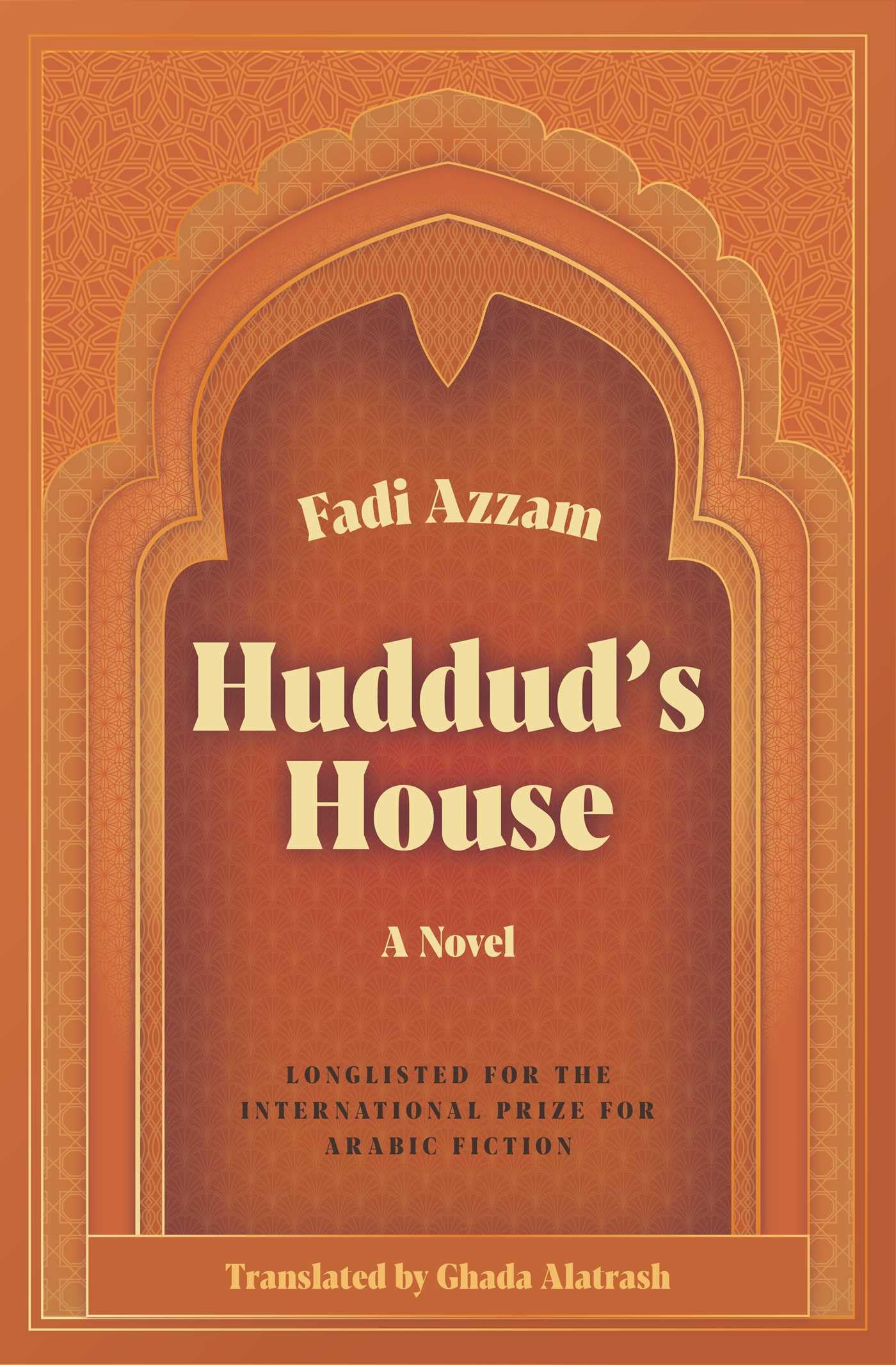
Huddud's House
by Fadi Azzam, Ghada Alatrash
Publisher
Interlink Publishing
Publication
Mar 19, 2024
Format
Paperback/Softback
Illustrated
No
Price
$18.00
Dimensions
5.25 x 8 x 0.8 in
ISBN
978-1623711153
ASIN
1623711150
Pages
320
Age
Adult 18+
Category
Literary FictionMilitary Fiction
Rights Sold
🌍 World Wide Rights Available
Description
Awards & Endorsements
Review
Related Titles

The Cassatt Sisters
Lisa Groen

Girl in a Box
Jean Gordon Kocienda

The Raven
Susan McCauley

The Judgment Line
Curt Varone

The Fabric of Wishful Thi...
Kathleen Curtis Wilson

Light and Shadows
Darin Gibby

All the Hidden Pieces
Dana Ridenour

Dog Logic
Tom Strelich

God's Own Country
Mathew L Reyes

In the Wake of Golgotha
Daniel Grace

Dark Cloud
Ken Sansom

| Publisher | Interlink Publishing |
| Publication | Mar 19, 2024 |
| Format | Paperback/Softback |
| ISBN | 978-1623711153 |
| Pages | 320 |
| Age | 19 - 99 |
| Price | $18.00 |
Categories
Literary FictionMilitary Fiction
BISAC Codes
FICTION / War & Military
FICTION / Literary
Huddud's House
by Fadi Azzam, Ghada Alatrash
A haunting contemporary novel, longlisted for the International Prize of Arabic Fiction, Huddud's House is a rich tale of love in the time of war, based in the storied city of Damascus.
How far is love willing to travel in search of its own lost voice?
When tyranny unleashes destructive forces that threaten to overwhelm a country, what are the effects on the lives and choices of ordinary humans? When citizens become inhabitants of a land of extremes, what do they do, to whom do they flee?
Shadowing the days of Syria’s Arab spring, Fadi Azzam’s epic novel, Huddud’s House—a haunting, contemporary novel rooted in the soil of Damascus, the oldest inhabited city in humanity—is a sprawling tale of love in time of war. Focusing on a quartet of characters torn between leaving and returning to Damascus, it follows intertwining stories of love and violence to their boundaries.
Azzam writes the spirit of resilience and resistance of the Syrian peoples. A saga on the dangers of ignoring threats or forgetting atrocities, he braves a long-distance search for his people’s voice, one that violence cannot silence.
How far is love willing to travel in search of its own lost voice?
When tyranny unleashes destructive forces that threaten to overwhelm a country, what are the effects on the lives and choices of ordinary humans? When citizens become inhabitants of a land of extremes, what do they do, to whom do they flee?
Shadowing the days of Syria’s Arab spring, Fadi Azzam’s epic novel, Huddud’s House—a haunting, contemporary novel rooted in the soil of Damascus, the oldest inhabited city in humanity—is a sprawling tale of love in time of war. Focusing on a quartet of characters torn between leaving and returning to Damascus, it follows intertwining stories of love and violence to their boundaries.
Azzam writes the spirit of resilience and resistance of the Syrian peoples. A saga on the dangers of ignoring threats or forgetting atrocities, he braves a long-distance search for his people’s voice, one that violence cannot silence.
Reviews, Awards & Endorsements
Review
“[T]he gem of the Arabic literature of dissent... [Sarmada] isn’t narrowly political and doesn’t paint a portrait of the uprisings themselves. Instead, it gives us something much more valuable: a detailed view of the entire mechanism of a culture—its connection to the land, its way of telling stories, and its idiosyncrasies. ... Channeling Marquez and Borges, Azzam winds the plot audaciously, bringing the story to highly surreal and disquieting places.” -- ―The New Yorker on Sarmada
“Fadi Azzam proves to us that there are still undiscovered gems in Arabic literature… beautiful writing, long stifled by dictatorship, has just begun to free itself from the grips of censorship. Sarmada and its women dance in front of us with all their senses; they take us by the hand and escort us into their village homes, where the events of this great novel take place.” -- ―Rafik Schami on Sarmada
“Brimful of magic, Sarmada is a book to be swallowed in rapturous gulps. It’s beautifully written … This is a very Syrian novel, illustrating sectarian co-existence and providing glimpses of the country’s mystical and literary wonders … Sarmada is, indirectly, an early novel of the contemporary Arab revolutions.” -- ―The Independent on Sarmada
“Huddud's House is one of those beautiful texts that paint the darkness of reality without confining it to the Syrian space … Difficult love stories intersect as the author takes the reader on a journey through the depths of the human soul that desires, craves, hates, is jealous, and fights for those desires ...” -- ―Fadhila El Farouk
“A landmark work of contemporary Arabic literature, at once allusive and defiant … An enigmatic novel of resistance by the prizewinning Syrian writer in exile. Huddud’s house is a real place in Azzam’s elegantly unfolding story, a ramshackle maze containing 170,000 Arabic books and 12,000 manuscripts … Given the subversive themes that punctuate a narrative that, at its best, is reminiscent of García Márquez, it’s small wonder that its author has fled Syria for the safety of Britain.” -- ― Kirkus Reviews
“Fadi Azzam proves to us that there are still undiscovered gems in Arabic literature… beautiful writing, long stifled by dictatorship, has just begun to free itself from the grips of censorship. Sarmada and its women dance in front of us with all their senses; they take us by the hand and escort us into their village homes, where the events of this great novel take place.” -- ―Rafik Schami on Sarmada
“Brimful of magic, Sarmada is a book to be swallowed in rapturous gulps. It’s beautifully written … This is a very Syrian novel, illustrating sectarian co-existence and providing glimpses of the country’s mystical and literary wonders … Sarmada is, indirectly, an early novel of the contemporary Arab revolutions.” -- ―The Independent on Sarmada
“Huddud's House is one of those beautiful texts that paint the darkness of reality without confining it to the Syrian space … Difficult love stories intersect as the author takes the reader on a journey through the depths of the human soul that desires, craves, hates, is jealous, and fights for those desires ...” -- ―Fadhila El Farouk
“A landmark work of contemporary Arabic literature, at once allusive and defiant … An enigmatic novel of resistance by the prizewinning Syrian writer in exile. Huddud’s house is a real place in Azzam’s elegantly unfolding story, a ramshackle maze containing 170,000 Arabic books and 12,000 manuscripts … Given the subversive themes that punctuate a narrative that, at its best, is reminiscent of García Márquez, it’s small wonder that its author has fled Syria for the safety of Britain.” -- ― Kirkus Reviews
Authors
Current Licenses
🌍 World Wide Rights Available