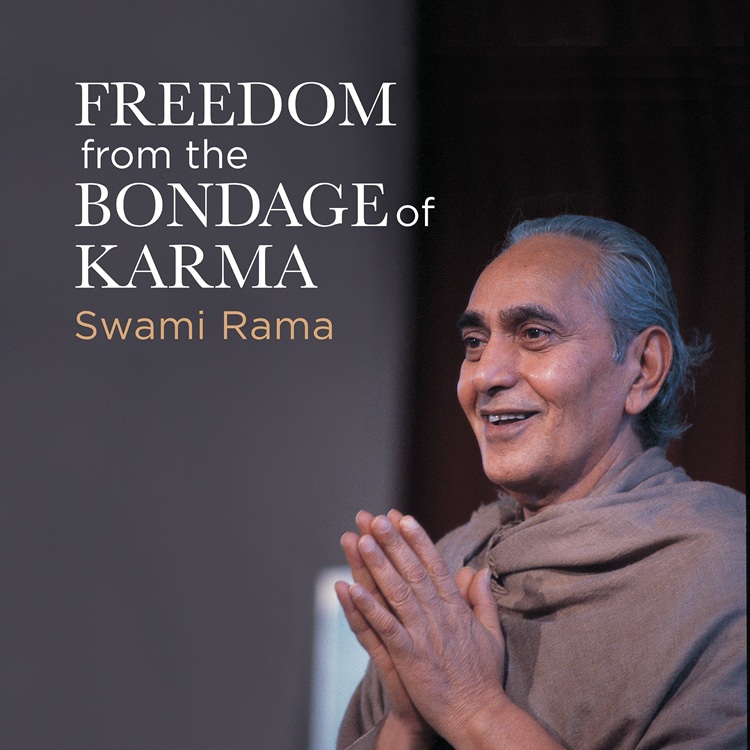
Freedom from the Bondage of Karma
by Swami Rama
Rights Sold
Description
Author(s)
Swami Rama
Related Titles


| Publisher | Himalayan Institute |
| Publication | Jan 01, 1977 |
| Format | Paperback/Softback |
| ISBN | 978-0-89389-031-5 |
| Pages | 89 |
| Age | 18 - 99 |
| Price | $10.95 |
Freedom from the Bondage of Karma
Karma is the activity of doing and being. It is traditionally symbolized as a rope with strands made of actions, thoughts, desires, and the latent, subconscious tendencies of personality.
The effect of these constituent aspects of karma is to keep the mind in a state of constant agitation and outward-directedness in search of appeasement. The result is enslavement to the many objects, ideas, fantasies, and pleasures which scream for the mind's attention. As long as the mind remains in this scattered and dissipated condition, there can be no hope of freedom from karma.
In the eight lectures included in this volume, Swami Rama offers a series of perspectives on man's most significant responsibility―that of self-understanding. Analyzing the mechanisms of karma and the functioning of mind, Swamiji demonstrates the kind of self-study each student of life must undertake to gain liberation and attain freedom from the bondage of karma.
Author