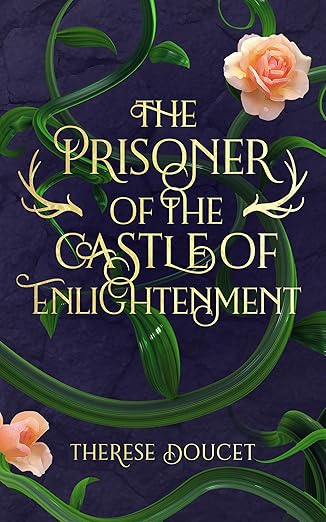
The Prisoner of the Caslte of Enlightenment
Rights Sold
Description
Author(s)

Therese Doucet
Related Titles


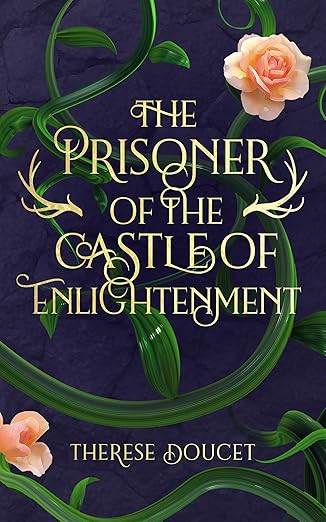
| Publisher | Strange Violin Editions |
| Publication | Oct 20, 2026 |
| Format | Paperback/Softback |
| ISBN | 979-8-9925742-0-3 |
| Pages | 280 |
| Dimensions | 5.25 x 8 in |
| Age | Adult 18+ |
| Price | $19.99 |
The Prisoner of the Caslte of Enlightenment
A lover in and of the darkness …
Violaine, a devotee of books and learning, is sold by her father to a mysterious nobleman to become his companion. Fearing herself at the mercy of a monster, Violaine instead succumbs to the seductive spell of her magical new home, and the love of a man she has never seen, who comes to her only in the darkness of night.
The Château de Boisaulne is a place of many mysteries, but also a refuge for children of the Enlightenment in a time when Europe still languishes under the repressive chains of monarchy and superstition. But modern thought meets ancient lore, as the castle borders the forest lair of the roi des aulnes, an ogre said to be the ancestor of Violaine’s unseen lover … or are they one and the same?
First published in February 2020 by D.X. Varos, with a forthcoming paperback reprint by Strange Violin Editions in Fall 2026.
Reviews, Awards & Endorsements
“The Prisoner of the Castle of Enlightenment is a remarkable work of fiction that manages to be a number of things at once: it is (among many other things) a variation on a popular fairy tale, a novel of manners, a good adventure story, and a philosophical tale … engaging, quick-paced, well-plotted, and charming as hell.” – Michael Austin, author of Reading the World and We Must Not Be Enemies
“Set against an exquisitely rendered French gothic backdrop, The Prisoner of the Castle of Enlightenment is an intelligently erotic page-turner not to be missed.” – Joe McGinniss Jr., Kirkus Prize finalist and author of Carousel Court and The Delivery Man
“A heady mix of historical fiction, fairy tale, philosophy, demonology, and romance. Call it baroquepunk—a fantasy of the French Enlightenment with a libertine edge and a goth heartbeat.” – Jeff Jackson, author of Destroy All Monsters and Los Angeles Times Book Prize finalist
“The Prisoner of the Castle of Enlightenment’s gripping story will delight readers seeking both complexity and evocative reading.” – D. Donovan, Midwest Book Review
“Doucet is great at painting a delightfully diverting fairytale land of intellectual salons and fanciful masquerade balls, cleverly combining … with the intelligence and sophistication of the Age of Rationality times her characters are about to grow into.” – Chicago Center for Literature and Photography
“The Prisoner of the Castle of Enlightenment took me on a journey, to France, to centuries ago, to the exotic and erotic castle where ideas and philosophy are debated and fought over, and the desire to learn more, to be more, to love more deepens, especially as night descends. Unforgettable. A fabulous, fabulist tale from a new novelist to watch.” – Caroline Bock, author of The Other Beautiful People
#13. The Prisoner of the Castle of Enlightenment
by Therese Doucet
A dark fairytale romance set in the intellectual landscape of Enlightenment France
If you’ve ever wanted to read a fresh version of Beauty and the Beast, and when I say fresh, I mean dark, sensual, and dotted with Enlightenment-era philosophical discussions, then Therese Doucet’s The Prisoner of the Castle of Enlightenment is exactly what you’ve been looking for.
The novel’s protagonist Violaine is a little bit different than the virginial Belle from Beauty and the Beast. Though both Belle and Violaine love books, Violaine reads books that an 18th century woman probably shouldn’t have access to; she is a widowed mother of two, and she doesn’t totally mind being sold by her father to be a mysterious wealthy nobleman’s companion – though she only felt like a prisoner for a brief time before getting used to the intellectual freedom the castle and the nobleman afforded her.
“‘Do you wish to leave?’
“‘No,’ I found myself answering honestly, surprised to feel the truth of it.”
This mysterious Marquis has a palace run by invisible servants; he allows Violaine to get familiar with the grounds and library, and they exchange letters to get to know each other until eventually she is ready to meet him. The Marquis visits her only at night; she does not know what he looks like, only that their nights are passionate and their intellectual connection deep. The mystery of his appearance works wonders for my curious readerly mind.
The castle is eventually populated by other Enlightenment-era intellectuals who are invited by the Marquis to escape to the French countryside of Boisaulne where they are free to discourse, read, and create things that they could otherwise be persecuted for; the political undertones of the novel reflect real-life struggles of individuals during the Enlightenment period who struggled to reconcile their views with the Church. In that way, this novel fits neatly into a sort of historical fantasy genre, offering plenty of both for a myriad of readers to enjoy.
“It appears the domain of Boisaulne borders on several villages of heretics…these depraved dregs of humanity ought to have been wiped out with the rest of their kind a century ago.”
This novel combines several fairy-tales and myths, and darkens them to appeal to an edgy adult audience. Though at times it does feel as though the story is going a bit off track, Violaine’s personal growth and passions are always brought to the forefront again. It is refreshing to read a novel where a strong widowed mother is at the forefront of the fairytale, and not your usual helpless damsel. This intelligent retelling weaves us through history with fantasy, grounding us and opening our doors to enligh...
Author
Therese Doucet
Therese Doucet grew up in Tucson, Arizona, and currently lives in Washington, D.C. In addition to being a writer, she runs a small literary press called Strange Violin Editions. You can visit her author website at theresedoucet.com and her publishing website at strangeviolineditions.com.